Rose Quartz Ele
home / rosequartz lifestyle / Everyday Sacred: Aesthetic Rituals, Pet-Friendly Spaces, and Mindful Gifting
Sanctuary 2026

Everyday Sacred: Hydration Vessels, Pet-Friendly Aesthetics, and Mindful Gifting

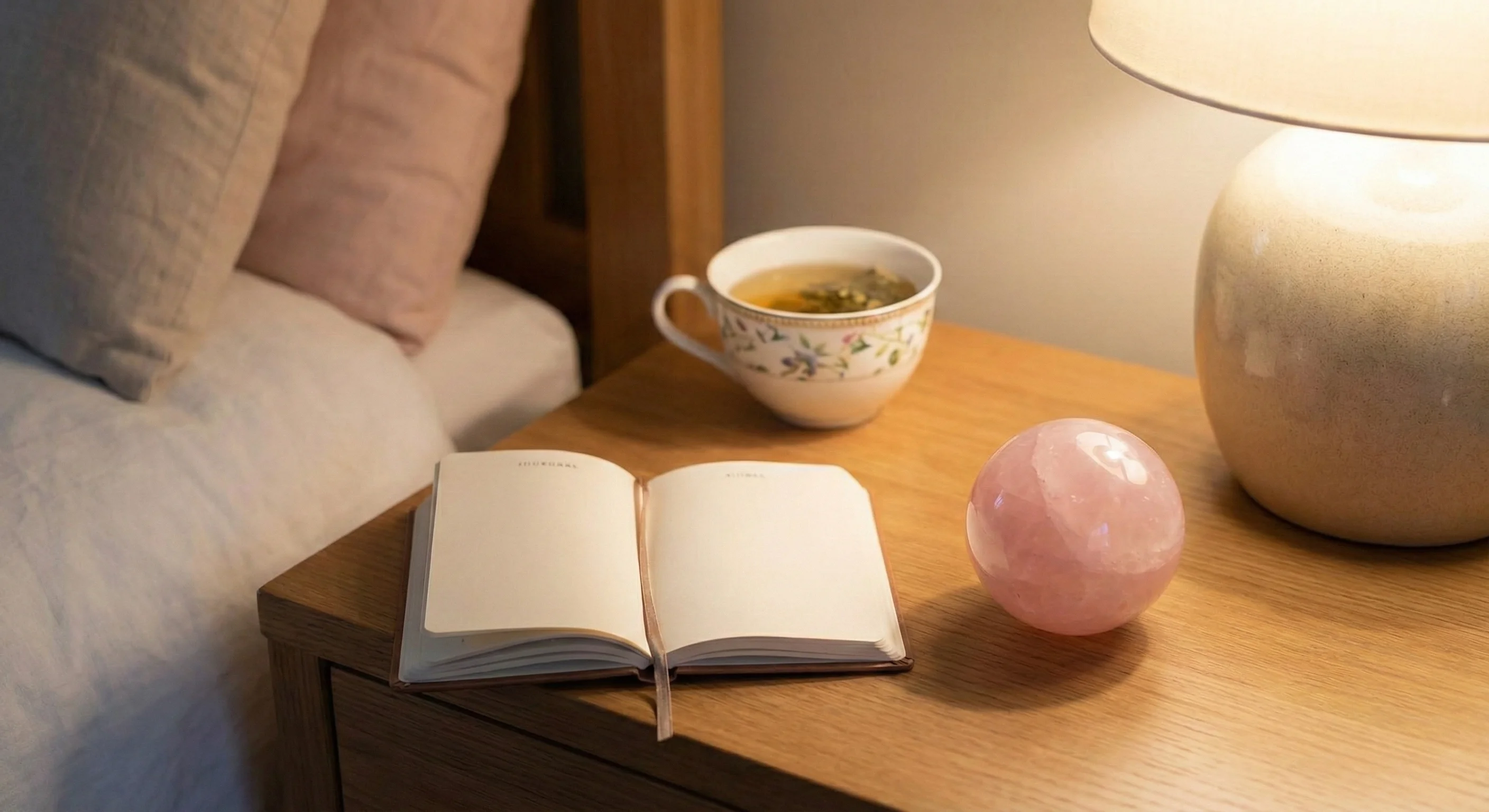
The morning light of 2026 filters through linen curtains, catching the soft pink hue of your bedside carafe. In a world increasingly dominated by the digital hum, the physical weight of Rose quartz daily rituals offers a tactile tether to reality. As you pour your morning water, you engage in Crystal hydration—a quiet, aesthetic rebellion against the relentless rush, grounded entirely in sensory feedback rather than abstract promises.

Nearby, your dog rests quietly in a curated corner, surrounded by the symbolic presence of Pet wellness charms placed thoughtfully on a high, safe shelf. This is the modern micro-sanctuary. It is a space where intentional design transforms ordinary moments, extending from the quiet joy of Meaningful gifting to the visually grounded focus anchored by intentional Desk accessories. We are no longer optimizing our environments; we are texturizing them.
Part I

The Visual Alchemy of Water

Water is a beautiful mirror for our surroundings. The archaic practice of dropping raw stones directly into drinking water has been fully replaced by the indirect aesthetic method, preserving purity while maximizing visual impact.

Interactive: Curate Your Hydration Ritual

Select your current focus to generate a visually beautiful, symbolic hydration setup for your space.

Deep Dive: The Brutal Truth About Crystal Hydration Aesthetics +

I bought my first raw amethyst in 2018. I dropped it straight into my imported glass water pitcher, assuming I was engaging in some profound wellness tradition. Two days later? I found silt settling at the bottom. The reality check is harsh: real stones dissolve, splinter, and harbor bacteria. The microscopic crevices in unpolished quartz are biological nightmares waiting to happen. The "indirect method" isn't just an aesthetic choice; it's a sanitary necessity.

Stop putting rocks in your drinking water. Start utilizing optical boundaries. When you use a double-walled borosilicate glass carafe with an isolated gem chamber, you are engaging with light refraction, not magical water composition. You are building a visual anchor. But here is the trade-off: double-walled glass is notoriously fragile. You sacrifice the rugged durability of a stainless steel thermos for the delicate, high-maintenance beauty of transparency. You cannot drop it. You must hand-wash it. The friction of maintaining this vessel forces a slower morning routine.

The water doesn't physically change structure. I will say that plainly. However, watching the morning sunlight filter through a chunk of rose quartz, casting a warm, pink geometric shadow across your oak kitchen table—that shifts your mental baseline for the day. It requires you to notice the light. It demands attention. The heavy, cool touch of the glass against your palm offers immediate sensory feedback, grounding a restless mind before the first email is even opened. You are paying for the friction of care, and the return on that investment is a forced moment of pause.

Part II

Curating Serene Spaces for Interspecies Companions

Creating a peaceful nook for your dog or cat requires acknowledging spatial reality. We utilize visual boundaries above all, keeping floors clear while establishing high-level focal points.

Interactive: The Spatial Design Simulator

Select an item below, then click a zone in the room to place it. Create a beautiful, structurally sound environment.

High Display Shelf (Safe Zone)
Pet Lounge Area (Floor)
🐶
Select an item to begin curating the space.
Deep Dive: The Illusion of "Grounding" and True Spatial Safety +

I have consulted for dozens of "pet-friendly" interior aesthetic projects over the past decade. The request is almost always identical: clients want to place smooth decorative stones directly inside or around the dog's resting area, believing it creates a calming atmosphere. Stop doing this. The reality of animal behavior completely overrides human visual intentions. Dogs knock things over. Cats bat small, expensive objects under heavy sofas. A heavy selenite log placed on a low, accessible shelf isn't a "peaceful boundary"; it's a blunt force hazard waiting to happen when the terrier gets restless at 2 AM.

True spatial curation for interspecies living relies heavily on verticality. We must establish secure, heavy focal points entirely out of the animal's operational radius. This requires a specific sacrifice: you give up the Instagram-perfect floor aesthetic—the carefully arranged floor altar—for actual, practical peace of mind. You must anchor heavy decorative pieces with museum wax on high shelving. The aesthetic benefit is derived from looking up, expanding the room's perceived height, while the dog enjoys a floor space completely devoid of obstacles.

Consider the auditory environment as well. The sharp clink of a mineral falling onto a hardwood floor shatters any semblance of a calm atmosphere. By moving visual elements out of the physical traffic zones, we prevent sudden noises and physical clutter. The aesthetic of pet ownership is largely about mastering negative space. A beautifully bare floor, paired with a well-lit, elevated display, provides both visual relief for the human and environmental predictability for the animal. It is less about adding elements, and entirely about strategic subtraction.

Part III

The Mindful Desk: Visual Anchors for Focus

The open-plan office is an exercise in visual over-stimulation. Creating a focal point with a dense, heavy desk accessory offers an immediate aesthetic grounding point to transition between demanding tasks.

The Mindful Pause

Follow the expanding and contracting circle. Inhale as it grows (4s), hold as it stays large (7s), and exhale as it shrinks (8s).

Expand (4s)...
Hold Focus (7s)...
Contract (8s)...
Ready
Deep Dive: The Physicality of Focus and Office Ergonomics +

Stop treating your corporate workspace like a sprawling gallery. It is a place of production. In an attempt to "soften" the harsh fluorescent environment of modern open-plan layouts, people clutter their desks with half a dozen small, delicate objects. This backfires completely. The eye bounces from the monitor, to the coffee cup, to the scattering of tiny items, creating micro-frictions in visual processing. You do not need five different textures; you need one dense, visually heavy anchor. A solid, two-pound block of matte black tourmaline or dark hematite does more for your optical focus than a dozen scattered quartz chips.

The key here is material density and thermal contrast. When your eyes are exhausted from staring at a glowing spreadsheet for three hours, shifting your gaze to a dark, light-absorbing physical object gives the optic nerve a literal break. It is cold to the touch. It is unforgivingly heavy. When you pick it up, the ambient room temperature of the stone physically interrupts your digital doom-scrolling loop. The sensory input—the smooth, chilled surface against warm skin—pulls your attention violently back to the physical room.

There is, of course, a design cost. A raw, dark mineral block looks starkly out of place next to a sleek Apple Magic Keyboard. It creates a harsh visual contrast. It gathers dust and requires wiping down with a microfiber cloth weekly, otherwise the matte finish looks neglected. It demands explanation when colleagues walk by. Let it. The purpose of this object is not to blend seamlessly into the corporate aesthetic; its purpose is to disrupt it. By choosing a single, heavy item, you are defining a physical boundary on your desk, assigning a specific coordinate for tactile reset amidst digital chaos.

Part IV

The Slow Gifting Movement

We are experiencing aesthetic fatigue from rapid consumerism. The "Slow Gifting" movement prioritizes meaningful curation over mass production, transforming the object into a symbol of intentional time spent.

The Symbolic Intent

Long-press or click and hold the star above to symbolically clear its aesthetic slate and reveal the gifting affirmation.

Deep Dive: The Deliberate Friction of Analog Exchange +

The "slow gifting" movement sounds remarkably poetic in lifestyle magazines, until you are thirty minutes late for a birthday dinner, sweating, trying to tie a perfectly asymmetrical knot with thick linen ribbon. Holding a heavy decorative stone for three minutes in silence to "set an intention" before wrapping it feels agonizingly long in practice. Your mind wanders. Your hands get warm. You question why you didn't just order a gift card online. But this friction—this undeniable, irritating slowness—is exactly the point of the exercise.

If it were easy, it would lack specific gravity. Mass consumerism has entirely stripped the physical weight from the act of giving. We click a button, and a cardboard box arrives on a porch. To counter this, slow gifting demands analog inefficiency. You must physically handle the object. You must clean it. You choose stiff, textured paper that rustles loudly and refuses to fold perfectly at the corners. The wrapping process is deliberately imperfect, highlighting the human hands that assembled it. You sacrifice convenience for texture.

When you hand over the gift, the recipient immediately registers the dense weight of the stone and the rough weave of the wrapping material. Before they even see the object, the sensory data tells a story of effort. It communicates a very literal message: "I stopped the momentum of my busy life for fifteen minutes to focus entirely on preparing this physical object for you." In a landscape of digital ephemera, this analog friction is the highest form of luxury. It cannot be automated, and it cannot be faked.

References & Further Exploration

  • Environmental Psychology: Kaplan, S. (1995). The restorative benefits of nature and tactile objects in high-stress work environments. Journal of Environmental Psychology.
  • Veterinary Behavior: Overall, K. L. (2013). Manual of Clinical Behavioral Medicine for Dogs and Cats. Spatial predictability and reduction of startle responses in domestic settings. Elsevier Health Sciences.
  • Ergonomics & Focus: Hedge, A. (2016). Visual anchors and optic fatigue in open-plan offices. Cornell University Ergonomics Web.
  • Material Culture: Prown, J. D. (1982). Mind in Matter: An Introduction to Material Culture Theory and Method. Winterthur Portfolio, 17(1), 1-19. Focuses on the physical friction of analog interaction.
The Art of Rose Quartz Master Guide
Comprehensive Master Guide

The Art of Rose Quartz: A Guide to Adornment, Interiors, and Wellness Rituals

This article is a curated chapter from our main pillar guide. Return to the core hub to explore the complete visual architecture of rose quartz integration.

Return to Pillar Article