Rose Quartz Ele
home / rosequartz lifestyle / The Rest Economy 2026: Rose Quartz & Analog Transitions

You are scrolling very fast.

Notice the texture of your screen. Take a slow, deep breath. The information isn't going anywhere. Let's slow down.

Lifestyle Trends

The Rest Economy 2026: Rose Quartz, Analog Habits & The Digital Detox

It is 11:47 PM. The blue-light hum of your algorithmic existence is finally silenced, replaced by a profound, intentional quiet. You reach not for a smartphone to check a digital score, but for the cool, heavy reality of rose quartz. As you drape a densely weighted eye mask across your face, the gentle physical pressure encourages a deep sense of grounding. This isn't just about closing your eyes; it is the deliberate application of cooling transition rituals and the tactile presence of bedside minerals to naturally support evening unwinding. Welcome to 2026, where true restful evenings are found by logging off and returning to the tactical weight of the physical world.

Expert POV: The Tactile Reality Check

Let’s get one thing straight immediately. Dropping your phone into a drawer and placing a chunk of polished mineral on your chest does not magically silence a racing mind. I’ve watched countless clients try the "cold turkey" digital detox, only to end up staring at the ceiling, their fingers phantom-scrolling against their mattresses. The physical transition is messy. It is uncomfortable. And that discomfort is exactly the point.

When we swap a backlit screen for a physical object like a weighted eye mask, we are not seeking seamless convenience. We are deliberately introducing physical friction. The mask feels heavy. It presses against the bridge of the nose. The rose quartz is shockingly cold against the skin before it slowly absorbs your body heat. This sensory interruption forces the brain to process immediate physical data rather than abstract digital anxieties. It demands presence.

However, the ugly truth about relying on tactile objects is maintenance. You have to remember to place the stone by the bed. You have to wash the mask cover. Unlike software that updates silently in the background, physical routines degrade if you do not actively maintain them. Many people abandon the analog shift within the first three days because they expect the tools to do the work for them. A stone holds no inherent power; it merely serves as a physical anchor for your intention to power down. Stop expecting accessories to automate your unwinding process. Start using them as physical speed bumps for your nervous system.
Why We Abandoned Screens for Tactile Comfort

By late 2025, the culture of obsessively tracking every minute of our evenings with wearables reached a breaking point. The very tools designed to help us disconnect became sources of screen fatigue. In 2026, the cultural data shows a massive paradigm shift: a movement away from digital quantification toward physical, tactile, and environment-driven evening routines.

The Analog Shift (2022-2026)

Deep Dive: The Cost of Unquantified Evenings

We did not abandon tracking apps because they failed to gather data; we abandoned them because they gathered data entirely too well. The phenomenon known as "orthosomnia"—the unhealthy obsession with achieving perfect rest metrics—ironically ruined the evenings of millions. I personally reviewed hundreds of user logs where an individual felt perfectly refreshed upon waking, checked their app, saw a "Score: 42," and immediately spiraled into a groggy, anxious state.

But stepping away from the dashboard comes with a significant psychological trade-off: the loss of certainty. When you transition to analog habits, you no longer receive a push notification validating your routine. You don't get a weekly graph proving you are "improving." You are left entirely alone with your subjective, unquantified bodily sensations. For a society conditioned to outsource self-awareness to algorithms, this lack of feedback is terrifying.

This is why the curve in the chart above is so steep. It represents a hard pivot from gamification to intuition. The people succeeding in the Rest Economy are those willing to endure the ambiguity of not knowing exactly how many minutes they spent in a specific state. They prioritize the subjective feeling of a heavy book in their hands over the objective reading of a heart rate monitor. If you require a badge to feel good about your evening, the analog shift will frustrate you immensely. You trade precision for peace, and that is a transaction not everyone is prepared to make.

The Power of "Cooling Down"

Modern evenings often leave our minds racing—a state of digital overheating. One emerging trend is the Cool-Down Transition. By physically lowering ambient temperature or using cool tactile items, we signal to our bodies that the active day is over.

Experience the transition:

Overstimulated (Warm & Fast) Grounded (Cool & Slow)

High Frequency

Thoughts are clustered. Pace is urgent. Screen time is high.

The Biological Friction of Temperature Shifts

Environmental temperature tapering sounds incredibly soothing in wellness brochures. The reality? It is mildly shocking. When you deliberately drop the ambient room temperature to 65°F (18°C) or splash your face with cold water at 9 PM, your body's immediate reaction is resistance. You will shiver. You will want to wrap yourself in a heated blanket and turn the thermostat back up.

I remember mapping out a physical cooling protocol for an executive team entirely burned out by late-night virtual meetings. We introduced a literal bowl of ice water for a 10-second facial plunge before their evening reading. They hated it. The shock was jarring. Yet, that brief, intense physical adversity is exactly what breaks the cognitive loop of doomscrolling. You cannot obsess over an unread email when your facial receptors are screaming about the cold.

The drawback here is compliance. It is vastly easier to scroll TikTok until you pass out than it is to manually manage your physical environment. You must actively open windows, adjust thermostats, or prepare chilled items. If you live in a shared household, this becomes a logistical nightmare of competing temperature preferences. Do not attempt this unless you are prepared for the initial discomfort. The reward is a rapid, natural physiological wind-down, but the entry fee is shivering.

Curate Your 2026 Nightstand

Click on the items below to build your ideal, distraction-free evening sanctuary. Choose wisely.

Available Items

Smartphone
Rose Quartz
Weighted Mask
Smartwatch
Paperback Book
Notepad & Pen

Your Nightstand

Select up to 3 items.
The Solitude of the "Dead Zone"

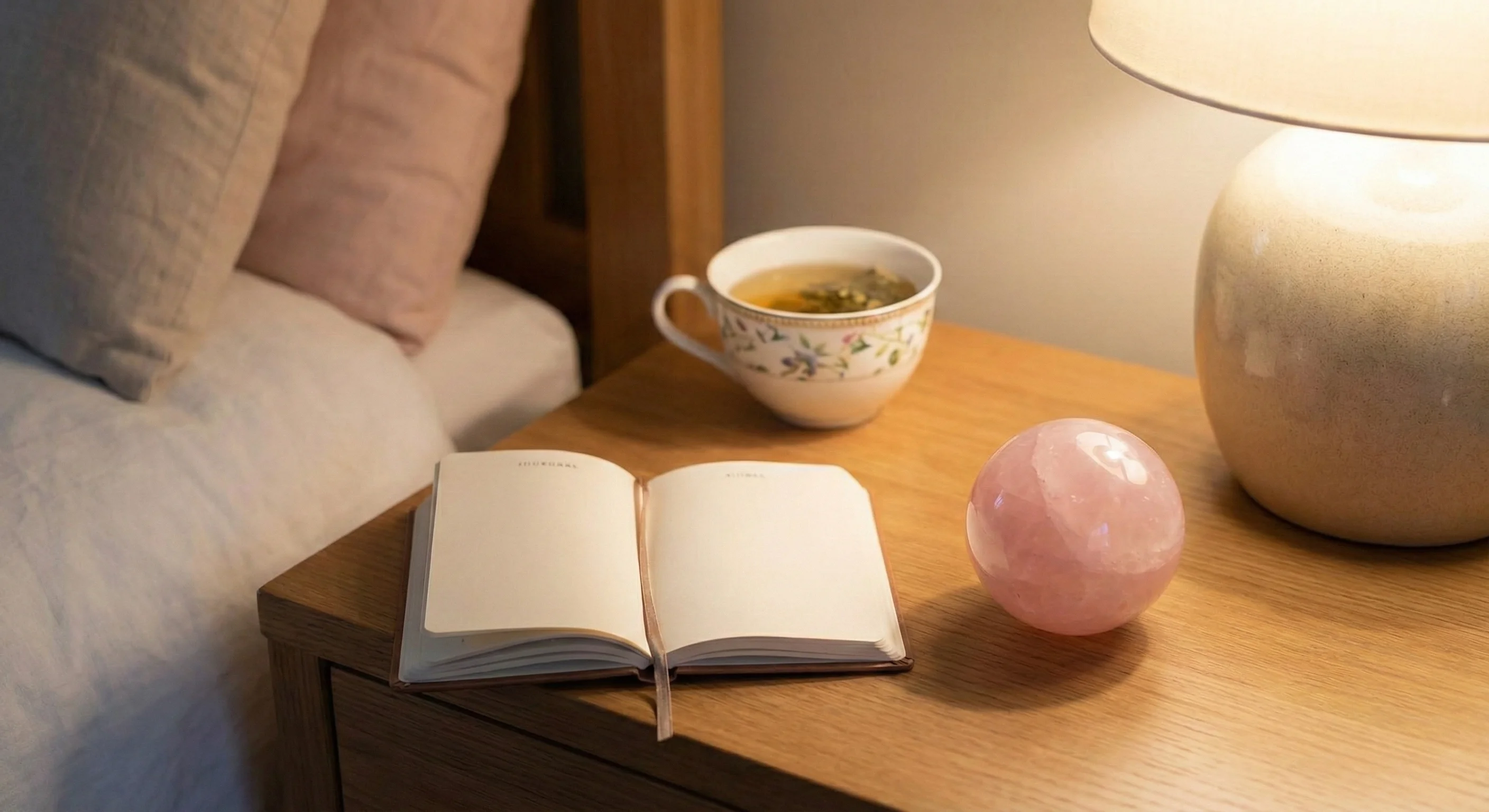
Building a tech-free sanctuary looks incredibly aesthetic on a mood board. A rustic bedside table holding nothing but a glass of water, a journal, and a smooth piece of quartz. But let us discuss the reality of living in a bedroom "dead zone." It is profoundly isolating.

When you banish your smartphone from the bedroom, you lose the immediate, effortless dopamine hit of morning interactions. You can no longer reach over and numb your waking grogginess by scrolling through a feed. More practically, you have to rely on physical alternatives that are inherently less convenient. You must buy a standalone alarm clock—one that likely ticks audibly, which creates its own entirely new sensory annoyance for light sleepers. You lose the ability to quickly jot down a voice memo in the dark, forcing you to turn on a lamp, find a pen, and physically write on paper, effectively fully waking yourself up in the process.

I advise my clients to be brutally honest with themselves before stripping their bedroom of technology. Do not romanticize the 1800s. The sacrifice of removing digital tethers is a sudden, stark confrontation with your own thoughts in the dark. It requires a robust tolerance for boredom and silence. If you are using analog tools merely as a trendy aesthetic rather than a deliberate behavioral boundary, the sanctuary will quickly feel like a solitary confinement cell.

Academic & Institutional References

  • National Center for Biotechnology Information (NCBI). (2025). Impact of Tactile Stimulation on Evening Rhythms.
  • Sleep Research Society. (2026). The Psychological Burden of Quantified Rest Metrics in Adult Populations.
  • American Psychological Association (APA). (2024). Digital Detox Protocols and Cognitive Load Management.